Why Summer Weeds Seem to Appear Overnight
One day your lawn looks healthy.
A week later, strange patches of bright green grass, fast-growing weeds, or thick clumps start appearing throughout your yard.
If you’ve noticed new weeds taking over your lawn this summer, you’re not alone.
July is one of the busiest weed seasons in Oklahoma. Summer heat, irrigation, thin turf, and missed spring prevention treatments create the perfect environment for weeds to thrive. Once temperatures climb, certain weeds grow aggressively and often outcompete stressed grass.
The good news is that identifying the weed is the first step toward controlling it.
Here are five of the most common summer weeds Tulsa homeowners are dealing with right now.
1. Crabgrass
What It Looks Like
Crabgrass is one of the most common summer lawn weeds in Oklahoma.
It grows in low, spreading clumps and often has a lighter green color than the surrounding turf. It frequently appears along:
- Driveways
- Sidewalks
- Curbs
- Bare spots
- Thin areas of the lawn
Why It Appears
Crabgrass is a summer annual weed.
It germinates in spring, grows throughout summer, produces thousands of seeds, and dies after the first frost.
Lawns that missed spring pre-emergent applications are especially vulnerable.
What To Do
Unfortunately, mature crabgrass becomes difficult to control by July.
The best strategy is:
- Improve lawn density
- Prevent future seed production
- Plan a stronger pre-emergent program next spring
Healthy, dense turf is one of the best defenses against future crabgrass infestations.
2. Nutsedge
What It Looks Like
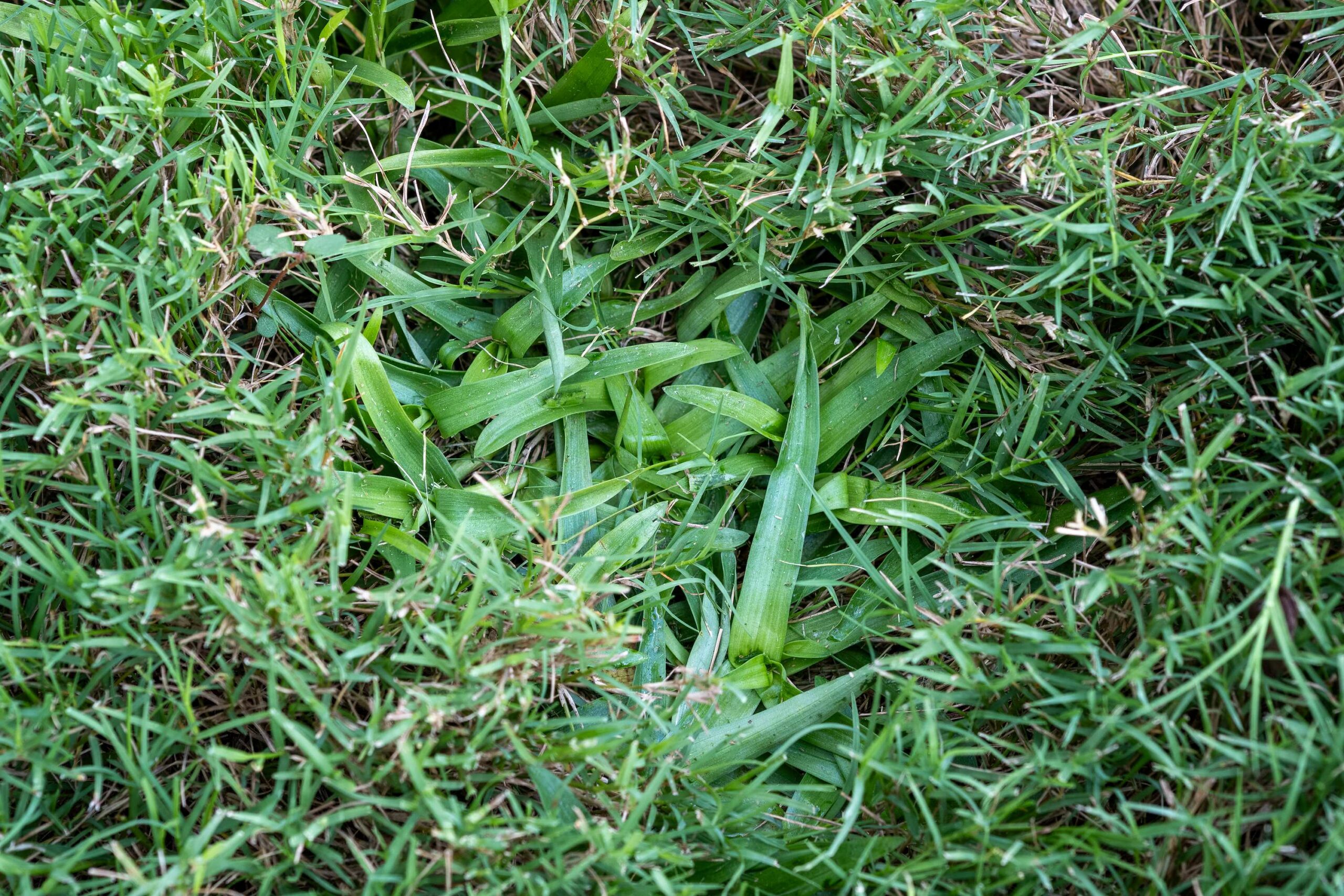
Many homeowners mistake nutsedge for grass.
It grows faster than most turf, stands upright, and often appears as bright green patches sticking above the lawn just a few days after mowing.
If you’ve ever felt like a weed grows back immediately after cutting the grass, there’s a good chance it’s nutsedge.
Why It Appears
Unlike crabgrass, nutsedge is not actually a grass. It’s a sedge that spreads through underground tubers.
Nutsedge often thrives in:
- Wet areas
- Poorly drained soil
- Overwatered lawns
- Irrigation problem zones
What To Do
Pulling nutsedge rarely solves the problem because underground tubers remain in the soil.
Instead:
- Correct drainage issues
- Avoid overwatering
- Use products specifically labeled for sedge control
Professional treatment is often the fastest route for larger infestations.
3. Dallisgrass
What It Looks Like
Dallisgrass forms thick, coarse clumps that stand out dramatically from Bermuda and Zoysia lawns.
Many homeowners mistake it for crabgrass.
The difference is that dallisgrass grows in dense perennial clumps and returns year after year.
Why It Appears
Dallisgrass survives through underground crowns instead of relying entirely on seed production.
That means it doesn’t disappear after winter like crabgrass.
Once established, it becomes one of the most frustrating grassy weeds homeowners encounter.
What To Do
Dallisgrass can be difficult to eliminate with typical DIY products.
Small clumps can sometimes be dug out, but larger infestations often require targeted treatment and long-term management.
4. Foxtail
What It Looks Like
Foxtail resembles grass when young.
As it matures, it develops distinctive fuzzy seedheads that give the weed its name.
It often appears in:
- Thin lawns
- Disturbed soil
- Bare patches
- Areas where turf density is weak
Why It Appears
Foxtail is another summer annual weed that takes advantage of open spaces in the lawn.
When turf is thin, sunlight reaches the soil surface and encourages weed germination.
What To Do
The best defense against foxtail is prevention.
Maintaining healthy turf through proper mowing, fertilization, and weed prevention programs helps reduce opportunities for foxtail to establish.
5. Spurge
What It Looks Like
Spurge grows low to the ground and spreads outward in flat mats.
It often appears in:
- Sidewalk cracks
- Driveway edges
- Thin turf
- Drought-stressed areas
Many homeowners don’t notice it until it has already spread across a large area.
Why It Appears
Spurge thrives in hot, dry conditions.
When lawns become stressed during summer heat, spurge quickly takes advantage of weakened turf.
What To Do
As with many summer weeds, prevention is easier than elimination.
Improving lawn density and reducing drought stress helps limit opportunities for spurge to spread.
Why Some Lawns Have More Weeds Than Others
Many homeowners assume weeds are simply bad luck. In reality, weeds are often symptoms of underlying lawn problems.
Common causes include:
- Thin turf
- Improper mowing height
- Soil compaction
- Overwatering
- Underwatering
- Poor fertility
- Bare soil
Weeds succeed when healthy grass struggles.
That’s why long-term weed control is ultimately about strengthening the lawn, not just spraying weeds.
Can You Spray Weeds During Oklahoma Summer Heat?
Homeowners often want immediate solutions once weeds become visible.
However, summer weed control requires caution.
Many herbicide labels include temperature restrictions because extreme heat can increase the risk of turf injury and reduce treatment effectiveness. Lawncare professionals specifically recommend caution with summer herbicide applications during periods of heat stress.
This is one reason why professional timing matters.
Different weeds require different treatment strategies depending on:
- Turf type
- Weather conditions
- Weed maturity
- Product selection
The Best Long-Term Weed Control Strategy
The healthiest lawns naturally resist weeds.
A strong lawn care program focuses on:
- Proper fertilization
- Seasonal weed prevention
- Healthy soil
- Correct mowing practices
- Lawn health monitoring
- Turf density
At DayBreak, our goal with proper weed control is to create conditions where desirable grass can outcompete weeds naturally over time.
That’s why our lawn care programs focus on healthier roots, thicker turf, and season-long lawn health, not just quick sprays.
Get Ahead of Weeds Before They Take Over
By the time weeds become obvious in July, many have already been growing for months.
The earlier the problems are identified, the easier they are to manage.
At DayBreak, we help Tulsa-area homeowners build stronger lawns through strategic weed control, targeted fertilization, and lawn care programs designed specifically for Oklahoma growing conditions. Our team monitors lawn health throughout the season and provides personalized recommendations to help keep your lawn thick, healthy, and easier to maintain.
Ready for fewer weeds and a healthier lawn? Request a free quote or contact the DayBreak team today to learn which lawn care program is right for your property.
A New Dawn for Your Lawn starts here.